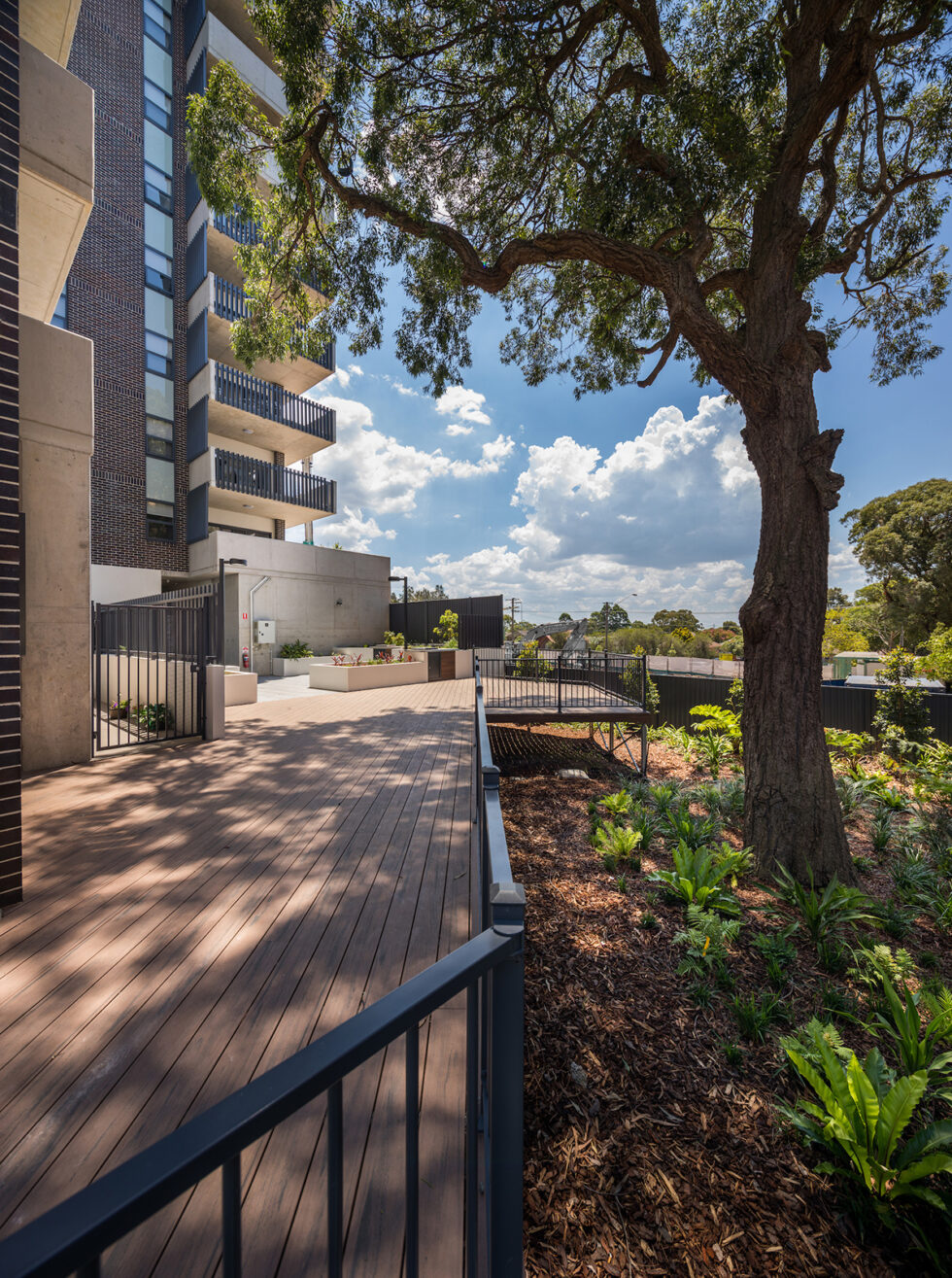
Affordable Housing
Affordable Housing is available to low to moderate income earners, who are working but may find it difficult to afford housing in the private rental market.
Affordable Housing aims to relieve rental stress and support households that have the potential for income growth or home ownership in the medium-term.
You need to meet the eligibility criteria to apply for Affordable Housing. The full application is detailed, so save time by using this quick eligibility checklist to see if you might be eligible.
Check your eligibility here See current SGCH listingsApply Online
You can apply online for Affordable Housing. To help you get all your documents ready, you might like to download our Affordable Housing Application Documents list.
Apply for Affordable Housing nowYou can also apply by downloading and using our paper form.
Affordable and Key Worker Housing at SGCH:
Your Questions Answered
The Basics
Affordable Housing dwellings are properties built for people who earn above the minimum salary to qualify for social housing but still struggle to afford private market rents.
This kind of housing helps lower and moderate income households to be able to live closer to where they work and ensure they are able to reasonably commute to work in places such as hospitals and schools.
Social Housing is highly-subsidised rental accommodation prioritised for people on very low incomes or with complex needs. Affordable Housing is subsidised rental accommodation for people who work, and earn low to moderate incomes. It makes it possible for them live closer to their workplace when they may otherwise be priced out of the market. It sits between Social Housing and the private rental market.
Social Housing represents 85% of our portfolio, totalling 6100 homes. Affordable Housing (including Key Worker) represents 15%, a total of 1200 homes.
Defining Affordable Housing
Yes, Affordable Housing isn’t just a general term, it’s an official policy and planning category and has specific definitions, eligibility rules and regulatory requirements.
In this context, it means:
- Housing delivered as part of new developments
- Secured through legal agreements
- Required to remain affordable for a defined period
The exact rent rules can vary, but they must meet agreed affordability benchmarks.
No, the definition depends on the specific program, funding model or planning framework. However, all Affordable Housing has two key features:
- Eligibility rules (usually based on income and/or occupation)
- Affordability requirements (such as discounted rent or income-linked rent)
Because Affordable Housing is delivered through multiple pathways, each with different rules. These include:
- Government funding programs
- Planning agreements
- Partnerships with developers or investors
Each pathway has its own rules, but all operate within broader government settings.
Government-funded Affordable Housing is limited to households that meet the NSW low-moderate income criteria (and other rules). Key Worker Housing is restricted to eligible occupations and is not open to the general workforce.
Defining Key Worker Housing
Key Worker Housing is a type of Affordable Housing set aside for people in essential jobs, such as:
- Nurses and healthcare workers
- Teachers and educators
- Police and emergency services
- Aged care and disability support workers
The goal is to help these workers live closer to where they work, especially in high-cost areas like Sydney.
Not really. Key Worker Housing usually sits within Affordable Housing programs – it’s simply targeted at specific occupations as well as income levels.
How Rents are Set
There are government guidelines that all community housing providers must follow.
For these properties:
- Rent must be at least 20% below market rent
- For very low-income households, rent must be no more than 30% of gross household income
- Whichever is lowest, applies
In practice, SGCH usually charges around 74.9% of market rent, which is slightly more generous than the minimum requirement and helps keep rents lower.
- SGCH is not legally required to follow government rent rules
- However, SGCH still generally applies a discounted market rent (up to 74.9%)
- Rent is not capped at 30% of income, but SGCH tailors rents to ensure tenants are not over-extended.
Is it really “affordable”?
Because affordability is measured relative to the market.
In Sydney, market rents are high, so even a discounted rent can still appear expensive in dollar terms. This reflects broader housing costs, not a lack of regulation.
A more accurate term may be “subsidised housing”. But for now, Affordable Housing is the official government term that relates to subsidy and development programs.
Eligibility
For government-funded Affordable Housing, eligibility is set by Government income bands:
- Low income: about 50%–80% of median income
- Moderate income: about 80%–120% of median income
SGCH applies these rules but does not set them.
For Key Worker Housing (privately funded):
- Eligibility is set by SGCH and the property owner
- It includes income and occupation requirements
- Only people working in eligible key worker roles can apply
Affordable Housing is governed by:
- State Government policy and planning rules
- Ministerial Guidelines and planning agreements
Community housing providers like SGCH must comply with the rules attached to each property.